2021 Smith-Madrone Vineyard & Winery Riesling – A Rising Varietal

Photo ©Michael Kelly
Background
There is always a bottle of Smith-Madrone Riesling in the cellar for various reasons. First, it is absolutely rated the best of Napa Valley scoring ratings at 95 points. Secondly the versality with a multitude of food pairings. I have written about it with Pad Thai, Shrimp & Spinach pasta, etc., all which pair exquisitely with the Riesling. Thirdly, the refreshing taste. If a fourth reason was necessary, one of the reported best dry Rieslings in the USA is Dr. Konstantin Frank in the Finger Lakes. I personally went on a mission purchasing various Riesling wines from the Finger Lakes, Washington, Sonoma, Napa, etc. After tasting some of the “better Riesling” wines in the USA, the absolute best hands down is still Smith-Madrone for a dry Riesling!
A quick background on Riesling. It is the 20th most grown variety and in “terms of importance for quality wines, it is usually included in the top three white wine varieties together with Chardonnay and Sauvignon Blanc planted worldwide” per Wikipedia. Riesling is adaptable to growing in both warm and cool climates with the flavors varying per temperature respectively of citrus and peach notes for warm, apple and tree fruit for cooler temperature regions.
The Wine – “Wine is bottled Poetry” – Robert Louis Stevenson

Photo ©Michael Kelly
In the California Dept of Food & Agriculture Grape Crush Final Report white wine harvest in 2025 was 1,324,464 tons. Riesling was only 27,857 tons, essentially down a small amount from 2024 of 29,348 tons. In 2025 the only two significant white wine increases were Albariño and Sauvignon Blanc. I believe Riesling suffered from poor press of the syrupy sweet Riesling phase (1960-2000). The dry Riesling will be making a major comeback.

Photo ©Michael Kelly
The 2021 Riesling is extremely aromatic with floral notes and green apple on the nose. The aromatics were so intense they hit the olfactory senses after the cork was popped, and I was carrying the bottle to the table! A deeper golden yellow color than previous vintages with medium viscosity. On the palate, hints of lemon zest, mixed with stone fruits (white peach and apricots) tame the secondary flavors of lime citrus. A modicum of beeswax making it extremely mouth filling can be found. On the finish, the minerality comes through strong and pure from either the volcanic soil, or sandstone, limestone or the general rocky soil found on the property. The minerality and acidity is counterbalanced with the delicious fruit bounty. Coming in at 13.2% alcohol, Smith-Madrone Vineyards produced 1,258 cases. The current release is their 2021 and listed on their website for $40/bottle.
The Food and Wine Pairing – “Food without wine is a corpse; wine without food is a ghost. United and well matched, they are as body and soul: living partners” – Andre Simon

Photo ©Michael Kelly
My wife prepared a Chinese Chicken Salad that was spot on for this evening meal. The recipe consisted of shredded chicken, shredded Chinese cabbage, cashews, red cabbage finely shredded, shredded lettuce, water chestnuts, Mandarin oranges, julienne carrots, finely sliced green onions. Garnished with crunchy Chow Mein noodles (next photo). Topped with Open Nature Asian Style Ginger Sesame dressing that was great!

The food and wine pairing was spot on with the bright acidity and very slight sweetness and fruit cutting through the rich sesame oil, soy sauce and sweet-tangy ginger vinaigrette. Moderate to low alcohol levels prevent any harsh burning or bitterness, especially with the salad dressing having a hint of ginger.
The Winery
The view from atop of Spring Mountain from their winery.

I have written about their wines often as their Chardonnay, Riesling, Cabernet Franc and most recently their Cabernet Sauvignon are not only in the upper tier of wines coming out of Napa but also reasonably priced as a solid value. I had contacted Stu Smith to do a quick visit not to taste the wines, but to update some photos for upcoming stories! I know passing on a tasting of great wines is not something I normally do but had my priorities. Stu still wanted to pour a glass of anything! Here are some recent stories on their wines:
Photo ©Michael Kelly
Cabernet Franc Story
Cabernet Sauvignon Story
Chardonnay Story

Left to Right: Charles, Stuart and François Photo ©Michael Kell
The winery was founded in 1971 by Stuart Smith. Today the management of the winery/vineyards are comprised of him and his brother Charles Smith. Charles is also the winemaker along with François Bugué.
We hopped on the gator 4-wheel drive and headed out throughout the winery with Stu pointing out things of interest and asking him to stop so a picture or two could be photographed at various locations.

Photo ©Michael Kelly
When touring the vineyard, this is how close they came to losing their vineyard from the devasting Glass Fire just burning to the edge of their property. Recently Stu installed fire hydrants around both the winery and maintenance buildings. He also installed a sprinkler system on the roof of the winery. This was not a simple or inexpensive undertaking. He believes that this will help with “ember suppression” should another devastating fire occur with high winds.
Sláinte,
Michael Kelly
https://californiawinesandwineries.com
2021 RJM Red Blend by Dell Valle Winery a Commemorate Wine

Photo ©Michael Kelly
RJM are the initials of Robert Joseph Molinari. The wine is crafted honoring his vision and passion for fine wine. His dedication helped in shaping the legacy of Del Valle Valle Winery in Livermore at 4948 Tesla Road.
The Winery has a wonderful kitchen which is open during tasting room hours. Visitors can obtain small bites, flatbreads, salads and sandwiches. On a recent visit, just wanted a quick and light snack of heirloom stone fruit, burrata and prosciutto salad and it was beyond excellent in both presentation and taste.

Photo ©Michael Kelly
This will be an on-going commemoration wine with a different blend year to year. The 2021 release was 50% Cabernet Franc, 30% Cabernet Sauvignon, 10% Petite Sirah, 5% Sangiovese and 5% Primitivo. The wine was aged 20 months in new and neutral oak.
On the nose and palate, a pleasant earthiness, juicy plum and balanced acidity with a hint of oak. This is easily both a sipping wine without food and a wonderful wine bringing out the best in lighter meals.

Photo ©Michael Kelly
Enjoyed the wine immensely as well as bringing back one specific and very fond memory of Bob on the golf course at Castlewood Country Club.
Look forward to their next release which will be a different blend and released soon.
Sláinte,
Michael Kelly
https://californiawinesandwineries.com
2022 Truchard Vineyards Pinot Noir and Italian Chicken Rollatini

Photo ©Michael Kelly
Background
Admittedly I don’t stock a lot of Pinot Noir wines in the cellar. It is not because I don’t like the varietal, but contrary, I am enthralled with its allure of fragrance, coloring and taste. Unfortunately, Pinot in my opinion is one of the most difficult grapes to produce with its finicky development cycle, thin skins, tight clusters and extreme sensitivity to weather conditions. Add to this low crop yields and as my good friend states “Pinot Noir is either very good or skunky!”. Over the years I have tasted, both in wine competitions and with friends, more skunky ones than exceptional ones. That said, I asked a waiter for a recommendation at a restaurant for a good Pinot Noir, and this was his recommendation. It was a solid everyday Pinot Noir without breaking the bank. After that evening, I went to the wine store and picked up a couple of bottles as we enjoyed Pinot Noir with selected dinner dishes.
The Wine – “Wine is bottled Poetry” – Robert Louis Stevenson

Photo ©Michael Kelly
First on the eyes, this wine held a majestic semi-translucent maroon coloring. No Omega Purple dye here! On the nose both red and black cherries along with ripe plums. In the palate, smooth, refreshing juice flowing gently in the mouth with balance acidity and caressing tannins. On the finish just a hint of cranberries and strawberries rounded out with a gentle vanilla conclusion.
2022 vintage came in with 14.1% of alcohol. The current vintage is 2023 on their website and showing a price of $38/bottle.
The Food and Wine Pairing – “Food without wine is a corpse; wine without food is a ghost. United and well matched, they are as body and soul: living partners” – Andre Simon

Photo ©Michael Kelly
Paired this evening with a new recipe called Baked Italian Chicken Rollatini that came out spectacular! It is baked chicken that is rolled, breaded and filled with prosciutto and smoked provolone cheese. The ingredients are chicken breasts filleted and pounded, kosher salt, black pepper, EVOO, Italian seasoned breadcrumbs, smoked Provolone cheese, butter and prosciutto. Accompanied by sauteed gnocchi and a fresh garden salad with bacon.
A very good wine pairing with the Pinot Noir complementing the chicken and a counterbalance to the prosciutto.
While not making my Best Wines Tasted in 2026, this is one to keep in the cellar for your everyday enjoyment.
The Winery
Not having visited the winery, only picked up a few key points on their website and reading:
- Tony & Jo Ann Truchard began buying up land in Carneros region from 1974 (20 acres) and today they have 400 acres with 280 acres planted. They opened the winery officially in 1989.
- They are a Sustainable & Certified Winery.
- It is a family run business with son Anthony Truchard II serving as General Manager. His background is diverse with degrees in philosophy and biology. He further went on to get his law degree in New York City and practiced intellectual property law before being asked to return to run the winery.
- The winemaker is Sal De Ianni also with an interesting background in Chemistry and later completing his MS in Enology at Cal Davis.
- They are located at 3234 Old Sonoma Road in Napa.
Look forward to obtaining a better understanding of the winery and their offerings on my next visit to Napa Valley.
Sláinte,
Michael Kelly
https://californiawinesandwineries.com
2011 Campo Viejo Rioja Gran Reserva

Photo ©Michael Kelly
Background on Rioja Wines
The gold lace/netting originated in 1858 called malla. It was developed as an anti-counterfeiting and fraud device. In the mid-19th century, Camilo Hurtado de Amézaga (the Marqués de Riscal) after a stint in Bordeaux learning winemaking returned home with his newfound knowledge. Key was the use of oak barrel aging at his winery in Elciego. This rocketed the quality of Rioja wines. They became wildly successful winning awards from around the world and the Spanish royalty. His newfound success drew fraudsters and counterfeiters who would buy empty Marqués de Riscal bottles, fill them with inexpensive table wine, re-cork them and sell as authentic bottles of wine.
The gold wiring/mesh was invented in 1858 by the Marqués having it tightly wound the bottle, making it impossible to remove the cork or open the wine without cutting the wiring/mesh. This “tamper resistant” approached allowed those getting the wine was genuine.
To protect his brand’s reputation, the Marqués invented gold wire netting in 1858. The wire was woven so tightly around the bottle that it was impossible to remove the cork or open the wine without permanently cutting the mesh. This provided consumers with a tamper-evident seal, ensuring the wine inside was genuine. This then became the symbol of award-winning wines from Marqués de Riscal and easy to identify them. Other producers adopted this successful “cage” technique, and it became synonymous with high end Rioja wines. Today it is just a reminder honoring their heritage and aesthetic classic packaging.
The Wine – “Wine is bottled Poetry” – Robert Louis Stevenson

Photo ©Michael Kelly
Rioja wines are dark, mature and luscious in a unique fashion. First on the eyes this is a dark brooding wine in the glass. Aromas waft up to the senses of plum, smoky tobacco and dark cherries. On the palate the wine is complex with striking flavors of ripe plums, dark cherries, with a smokiness following closely behind. On the finish, a hint of soft vanilla and mellow silky tannins finish off each sip.
The wine came in at 13.5% alcohol. Gran Reserva Rioja wines must age for a minimum of five years with at least two years in the bottle.
This wine was appropriately aged in the cellar and enjoy this evening as a 2011.
The Food and Wine Pairing – “Food without wine is a corpse; wine without food is a ghost. United and well matched, they are as body and soul: living partners” – Andre Simon

Photo ©Michael Kelly
The meal this evening was baked chicken cheese enchiladas. The prep work was done in advance and ready to bake as we wanted to watch the 49’er football game. The ingredients include sour cream, salsa, cheddar cheese, shredded chicken cooked in salsa, corn kernels, cumin, dried oregano, cayenne pepper, kosher salt, black pepper and thinly sliced scallions. The ingredients were wrapped in whole wheat low carb tortillas and then baked. Served with additional salsa on top.
This Rioja wine worked well with the chicken enchiladas with it lively fruit and acidity matching up with the tomato and chili sauce and spices. Without a heavy oak influence the wine cut through the cheese.
A great food and wine pairing this evening.
The Winery in Rioja, Spain

Map from Wine Tourism Spain https://winetourismspain.com/wine-regions/rioja/rioja-wine-map/
From the map you can see the location of Rioja in the northeastern Spain.
Previously, I wrote about Campo Viejo Rioja Gran Reserva having to age minimally two years in the barrel and five years being released. The Camp Viejo winery was built in 2001 and everything from the beginning was constructed on the principles of sustainability from their enology to their architecture. Below is picture of their winery.

There is not much on their website mentioning the winemaker, acreage, etc. One thing that they do mention is wanting the public to come and visit their operation.
Making such delicious wines for them does not require details on a website, just for you to enjoy each sip of this layered and structure wine.
Sláinte,
Michael Kelly
https://californiawinesandwineries.com
2016 Vall de Llach idus from Priorat – Always a Favorite
Where and what is Priorat?
Priorat is an area about 2 ½ hour drive west/southwest of Barcelona. Priorat consists of eleven small villages in the southern portion of Catalonia in the province of Tarragona. In comparison to the country, it is an extremely small region. Priorat is a Denominació d’Origen Qualificada (DOQa), in the southwest of Catalonia. It is one of only two wine regions in Spain to qualify as DOCa, the highest qualification level for a wine region according to Spanish wine regulations, alongside the well-known Rioja DOCa.

(Map from Quintin Sadler’s Wine Page, https://quentinsadler.wordpress.com/)
Brief History and Background of Priorat
This wine area has over two thousand years of history from the Romans. Due to the proximity of the Iberian Peninsula, it was controlled by the Moors until the twelfth century. In this area you get a fabulous combination of architecture from the Moorish influence as well as Romanesque.
The Priorat district gets its name from the Carthusian order who founded a monastery in the region in the end of the 12th century. Interestingly, the most changes have transpired during the last 30-40 years. Winemakers in the region upgraded their methods and equipment and began a modernization and professional approach to wine.

(Picture from https://vinenvacances.com/)
Weather, climate and soil are the major components of this region. The wine area receives 3000 hours of sunshine and roughly 15 inches of rainfall per year. The soil in the area is rich in hard slate, but the roots can go through seeking underground water. A lot of the vineyards in the area follow the terrain with terraces and steep slopes.
One of the two grapes which are used in this 2016 Vall Llach “Idus” is Granacha (Grenache) which is the lesser grape. One of the distinct traits of the grapes from the region is its ability to produce a strong, yet fresh wine. The second grape varietal used in the making of Idus and the predominate percentage is Cariñena and in the USA it is called Carignan. Carignan grows very well in the drier regions of California like the Central Valley and Sierra foothills.
Typical wines from the area have intense red coloration, with aromas of ripe fruit with a strong mineral trait from the slate vineyards. In the mouth a fleshy, strong flavoring with tannins being present are common. They present black plum, licorice and have a black pepper spice quality, coupled with berry and chocolate with a smoky scent. Cariñena is a unique black skinned grape varietal. It typically is used in blending in many wines.
The Wine – “Wine is bottled Poetry” – Robert Louis Stevenson

Photo ©Michael Kelly
The 2016 Idus is multifaceted, with alluring aromas of red forest fruit, fleshy black plums, with hints of forest herbs, wood smoke and dark minerals. Wide on the palate, the wine is both powerful and fresh for an old-vine Priorat; displaying good acidity, round tannins and an incredibly long finish. The percentage mix is 90% Cariñena and 10% Granacha. A dark color and medium to medium heavy viscosity is present. You immediately pick up on the palate, wood smoke from cedar and the mineral traces from the slate. It is what I describe as a representation of “old world” wine. Powerful with enough acidity to give an edge, but with round tannins so as not to overwhelm one’s senses. Together they provide a long and satisfying finish. On the label it states this wine can age up to 30 years with proper storage. The wine is almost “blackish” in color with just a slight deep purple rim. This is a very strong wine and recommended to be enjoyed with food.
The Food and Wine Pairing – “Food without wine is a corpse; wine without food is a ghost. United and well matched, they are as body and soul: living partners” – Andre Simon

Photo ©Michael Kelly
Paired this evening with a thick cut boneless pork chop, first browned then baked. Topped with Mama’s Hatch Salsa from New Mexico which added a tasty finish to the pork. Accompanied by asparagus with sautéed in butter. Also sautéed gnocchi with butter and topped with grated Parmesan cheese.
Conclusion
I hope you enjoy the side trip to Priorat as this growing region is extremely well-known in wine circles and the grape varietals Granacha (Grenache in USA) and Cariñena (Carignan) are extremely tasty and wonderful grapes grown both in Priorat and the USA. I have for years now always kept wine from the Priorat region in the cellar for the uniqueness, quality and delightful expression of the local area.
Sláinte,
Michael Kelly
https://californiawinesandwineries.com
Tour of Italy with Nicola Biscardo at Vinum55 in Chandler

Photo ©Michael Kelly
Nicola was here from Italy at Vinum55 last week providing an overview of six Italian and Sicilian wines. He began the evening talking about various key points: 1) how Italy only became a country in 1861. 2)Discussing Sicilian wines verses Italian wines in terms of terroir. 3) How the overall geography of Italy kept communities separate from each other’s customs, language, foods and wines. And lastly, how wines should be classified as industrial wine verses artisanal wines.

Photo ©Michael Kelly
We started out with a 2025 Marino Abate Gillo “Ariddu” from Scilly. This white wine stole the show with a bouquet that was extremely strong with aromatics of minerality, orange blossom, sage and thyme. It was crisp and acidic; it was kept in check. Nicola called it “Italy in a glass”. This tied receiving my highest marks for the evening with one other red wine having hit all the marks on the eyes, nose, taste and finish. A beautiful wine.

Photo ©Michael Kelly
The second wine from Mt Etna was the 2024 Cantine Patria Etna Bianco “Feminina” from the Northeast portion of the island. In order to be called “Etna” it must be grown between 1,800 to 3,000 feet elevation in almost black soil from the volcano. The wine is a Chardonnay that was elegant, fermented in both barrel and stainless steel. It had a subtle bitterness at the finish.

Photo ©Michael Kelly
We then moved to Italy proper on the east side towards the Adriatic waters. This was the 2025 Vigna Madre Pecorino Kriya. The winds off the sea decrease the temperature which provided a good acidity in the wine. It was soft and had a lovely mouth feel.

Photo ©Michael Kelly
Moving to D ’Abruzzo, we tasted the 2024 Vigna Madre Montepulciano D’ Abruzzo Kriya that Nicola lovingly referred to as Italy’s everyday wine. It inherited this nickname as it is low in acidity, dark color and can pair nicely with just about everything. The finish was subtle and could see how this could be enjoyed with so many foods.

Photo ©Michael Kelly
2022 Cantine Patria Etna Rosso “Feminina” took us back to Scilly. This being the “red wine” of wine being from the high elevation of Etna. Called the Barolo of the South with its elegance from aromatics to taste. For me an odd flavor at the finish, but all the other attributes were spot on.

Photo ©Michael Kelly
Here was my other top-rated wine, this being a red 2024 Marino Abate Nero D’Avola “Lapa”. Considered the most popular varietal in Scilly. With older vines and managing the vineyards, they only get 2 or 3 clusters per vine. The wine was very generous in aromatics and taste. High in antioxidants and with tight tannins. An excellent representation of Nero D’Avola and purchased a few bottles at the conclusion of evening.
Nicola Biscardo’s wines this evening were those of very small vintners which banded together and cooperatively sell their wines. They are not available in retail shops. Should you get a chance to hear Nicola speak about the wines, he is wildly enthusiastic, speaks with a charming Italian accent and as a salesperson, believes only the best wines come from Italy! A fun evening and some very tasty wines.
Sláinte,
Michael Kelly
S-K-Y-H-A-V-E-N Vineyards and Winery – 2023 Cabernet Franc

The Wine – “Wine is bottled Poetry” – Robert Louis Stevenson

Photo ©Michael Kelly
I had the opportunity to taste the 2023 Cabernet Franc, a Gold Medal winner at SF Chronicle wine competition at a recent visit with them. Left the winery with a purchase of a bottle to try with food at home. This wine on the eyes again provided a cavernous darkness in color and held all the varietal characteristics of both old world and new world combined. Pyrazines were minimal with only the exquisite taste of the fruit being presented. Aged 18 months in neutral oak. This wine also won a Gold Medal at the 2026 Arizona Governor’s Cup and “Judge’s Choice” award. An excellent representation of Cabernet Franc with 13.1% alcohol and available at $38/bottle.
The Food and Wine Pairing – “Food without wine is a corpse; wine without food is a ghost. United and well matched, they are as body and soul: living partners” – Andre Simon

Photo ©Michael Kelly
Tonight’s dinner was a slow cooker red wine braised beef short ribs. It is made with red wine, garlic, herbs and mushrooms. The ribs were first browned/braised on the skillet then placed in the slow cooker. Then onions and mushrooms were also browned with oregano, thyme, rosemary and marjoram to create the sauce. Then the sauce was poured over the ribs in the slow cooker. Bay leaves were then added. It then cooked for 8-9 hours.
The Cabernet Franc wine was chosen as it makes an ideal pairing with the wine’s acidity and structured tannins. The tannins cut through the fat of the beef counterbalanced with the dark fruit, pyrazines and earthy notes of the sauce. The fruit notes of dark berries, roasted bell pepper, subtle smokiness or sweet pipe tobacco resonated with the aromatics, herbs and red-wine reduction of the dish.
Accompanying by halved small Yukon Gold potatoes, roasted and topped with grated Parmesan cheese. Also, a fresh garden salad was served.
A very solid and delicious food and wine pairing this evening.
The Winery
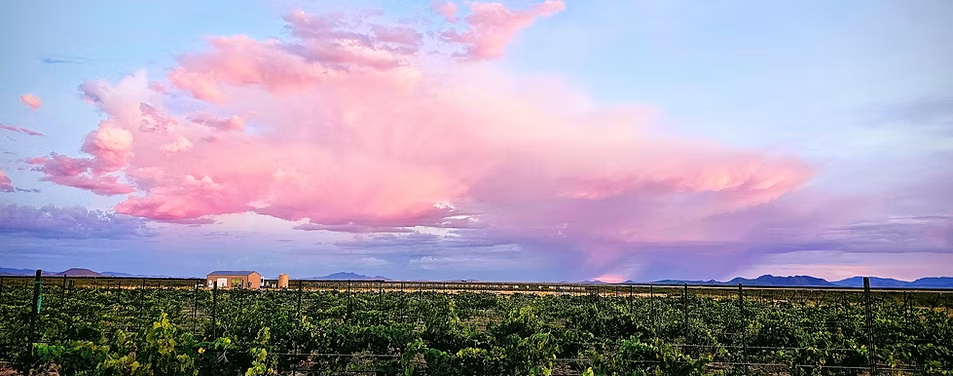
Picture by SKYHAVEN Vineyards and Wines
SKYHAVEN Wines was recommended by another winery on a recent visit to Willcox AVA and very much appreciated. Spoke to Bridget on the phone, setting up the time and date for the visit. Upon driving down several “dirt & gravel” roads, I had no idea what to expect. Drove in cold and I was instantly warmed up by their radiant personalities, open hospitality and sincere desire to produce outstanding wines.
Met with Chris Brinkmeyer, who is trained and earned his viticulture and enology degree from Yavapai College. He spent time working at Pillsbury Wine Company honing his craft. You know he has a twist on producing wines as rather than calling himself the winemaker, he goes by The Wine Shepherd. Once into our conversation, it made perfect sense as his belief is that “great wine isn’t manufactured, it’s guided. Coaxed. Listened to”.
His life partner is Bridget Hildebrand who also has a unique title as CPKO (Chief Pants Kicking Officer)! While a bit lighthearted, Bridget spent 25 plus years in building brands in the tech industry and traveling about the world tasting wines indigenous to various areas. Bridget handles the marketing, manages the tasting rooms and is the glue holding these various pieces together.
Just by the self-anointed job titles, this is no ordinary winery! While appearing lighthearted, their work ethic and determination is at a higher level. While only being in their second year, they have won awards at both the prestigious 2026 San Francisco Chronicle and Arizona Governor’s Cup wine competition. For a newbie wine company, this shows the dedication to their craft. Well done Chris and Bridget, the future is extremely bright for you.
Their property is ten acres with seven and half planted in vines. Each of their wines are all small lot with limited and controlled batches.
The name Skyhaven Vineyards and Winery is a long name, suffice it say it is easy to understand with the sky pictures taken the afternoon of my visit.

Photo ©Michael Kelly
The winery’s focus is on French, Spanish, and Italian varietals grown on the high-desert Willcox Bench. Their current lineup includes 2023 Syrah, 2023 Pandemonium blend (43% Grenache, 43% Mourvèdre, 14% Syrah), 2025 Viognier and 2025 Spectre Rosé. While all these wines are solid wines, their award-winning wines include:
2023 Cabernet Franc – 2026 San Francisco Gold Medal Winner
2023 Mourvèdre – 2026 San Francisco Silver Medal Winner
2023 Artificer Petit Verdot – 2026 San Francisco Silver Medal Winner
They have also received awards from the Arizona Governor’s Wine Competition.
When in Willcox and now Bisbee, where they opened a new tasting room stopping by and tasting their wines will be a real treat. If you get a chance to meet Chris and Bridget, you will be enthralled and wines will taste even better.
If you can’t attend either of those locations, they are scheduled to be at the SanTan Art and Wine Festival October 31st to November 1st, 2026, at 2218 E Williams Field Road, Suite 235, Gilbert, AZ in the Phoenix area.
Sláinte,
Michael Kelly
https://californiawinesandwineries.com
2009 Progeny Winery Cabernet Sauvignon, Special Selection Reserve. Elixir For a King!

Photo ©Michael Kelly
The Wine “Wine is bottled Poetry” – Robert Louis Stevenson

Photo ©Michael Kelly
The last time I tasted this wine was back in the spring of 2016. I purchased a couple of bottles, and it was past due to drink. Opened it up and had morphed into something extremely exquisite and almost heavenly. When I tasted it back in 2016, I stated from a previous story “one of the best wines” tasted! When tasting it in 2016, here was my review “first release of Special Selection Reserve (SSR), a 2009 Progeny 100% Cabernet Sauvignon. This was the winner! Only 100 cases were produced. This wine was aged in French oak barrels for 30 months and then aged 2 years in bottle before release. This was perhaps one of the darkest and most voluptuous Cabs I have come across in years. This was described as “a mouth filling wine of power and elegance” and I can only second that statement”. That statement still held true when tasting it the other evening. This 2009 was rated at 98 points and when doing a search for this vintage, it showed pricing ranging from $397 to $497/bottle. The wine came in 15.2%.
The current vintage today is 2019 and is listed at $250/bottle and was rated at 96 points.
The Food and Wine Pairing – “Food without wine is a corpse; wine without food is a ghost. United and well matched, they are as body and soul: living partners” – Andre Simon

Photo ©Michael Kelly
My wife prepared a creative dish of Udon noodles and filet mignon. The filet mignon was cut up into bite size pieces and tenderized then marinated in Chaka sauce sauteed with onion and garlic. Broccoli and Udon noodles were added to the skillet then tossed with a soy sauce mixed with cornstarch. Topped with sesame seeds. The meat was extremely enjoyable and the Udon noodles and sauce is always good. A very unique and delicious meal. The wine was a godsend with this meal. An extremely solid food and wine pairing.
The Winery

The property today verses 2016 (picture below)
The vineyard is located at 1032 Mount Veeder Road, Napa California. Betty O’Shaughnessy and Paul Woolls, wanted to take their experience with O’Shaughnessy Winery one step further and purchased the land which had been a cattle farm since 1885.
While predominate plantings are Cabernet Sauvignon the also have Merlot, Malbec, Petit Verdot and St Macaire on the property. They also have a small portion planted in Grenache, Mourvedre and Counoise grapes.

Picture taken in 2016 Photo ©Michael Kelly
The property is situated on a pristine Mt Veeder property. They have 260 acres with only 32 planted in vineyards. At first glance, you might think of yourself back in the “ode sod” of Ireland. The hillsides were strikingly green with the recent rains.

Picture taken in 2016 Photo ©Michael Kelly
Additionally, they enlisted the “stars” of O’Shaughnessy to put Progeny on the map. Sean Capiaux continues as winemaker, Alan Pierson once again is turning the vineyards into framed artwork.
They were under construction of their production facility when I originally visited which was completed in August 2016. Their hospitality building started in the summer of 2016 and was completed in the fall of 2017.
Their wines are limited to Trinity Blanc, Marsanne 42%, Roussanne 35%, Viognier 23% a gorgeous and mouth feeling white wine; Trinity Rouge, Syrah 50%, Grenache 27%, Mourvèdre 20%, Counoise 3%; Mt Veeder Reserve Cabernet Sauvignon, 90%, Merlot 4%, Malbec 3%, St. Macaire 2% & Cabernet Franc 1% and their very Special Selection Cabernet Sauvignon using 100% Cabernet Sauvignon grapes.
I need to revisit the next trip to Napa Valley to see the transformation of the vineyard, tasting room and winery.
If you are looking for one of the best representations of Napa Valley Cabernet Sauvignon, this is one surely to consider for that special occasion.
Sláinte,
Michael Kelly
https://californiawinesandwines.com
https://arizonawinesandwineries.com

Bodega Pierce Visit at Willcox AVA

This was the last stop on my three-day visit to the Willcox AVA district. While the last stop, it was the first one recommended by friends in Mesa to visit but timing worked out to be the last stop. Met with Dan and Barbara Pierce who are a fountain of knowledge regarding the Willcox bench, water issues and the history of the area.
The vineyard and tasting room in Willcox is at 4511 E Robb Road. Here on their property of 80 acres with 27 acres under vines at 4,200 feet elevation they produce 18 varietals. They include Syrah, Petite Sirah, Grenache, Mourvèdre, Viognier, Cabernet Sauvignon, Cabernet Franc, Merlot, Sauvignon Blanc, Sangiovese, Chardonnay, Pinot Gris, Pinot Noir, Tempranillo, Malvasia Bianca, Muscat of Alexandria, Zinfandel and Graciano. While knowing of their Cabernet Franc, which they have entered the annual International Cabernet Franc Competition, I was taken back by their offerings of varieties.

Photo from Bodega Pierce
They purchased the property in 2011 that was an existing winery with vineyards planted in 2005. They did an extensive rejuvenation and expansion of the vineyard and opened the tasting room in 2014. Currently they are producing approximately 2500 cases a year.
Their other tasting room and the production winery is in Clarkdale, Arizona at 1341 W State Route 89 A, about halfway between Sedona and Prescott Valley. Dan and Barbara’s son, Michael is their winemaker. Michael studied winemaking at UC Davis and Washington State University. Michael has a distinguished pedigree starting out head winemaker at Stronghold Vineyard (2010-2014), Director of Enology (2014-2018) & Director of Viticulture & Enology (2018-2025) at Yavapai College and now is at Yavapai College, University of Arizona adjunct faculty working on a variety of activities regarding commercial horticulture. His background is very extensive as well as being the head winemaker of Bodegas Pierce. His work was acknowledged by Wine Business Monthly in 2020 as Bodega Pierce being named Hot Brands of the year.
Barbara is currently the immediate past president of the Arizona Wine Growers Association and still active in political water right discussions. Dan also is extremely involved in the water rights for Willcox AVA and provided some keen insights into the water perspective.
Willcox AVA Background
The Willcox AVA is the largest in Arizona and encompasses 833 square miles in southern Arizona.

Map from University of Arizona Cooperative Extension
The AVA length ranges from 40 to 45 miles, running north and south and the width averaging between 15 to 25 miles wide east to west. It is a large flat valley (or playa/bench) with an average elevation of most vineyards being 4,200 to almost 5,000 feet elevations. The Willcox Playa is sitting between the Dragoon Mountains to the west reaching 7,500 feet and the Chiricahua with the highest point 8,000 feet and Dos Cabezas Mountains 7,500 feet to the east. The highest mountain peak is in the northeast at 8,100 feet. With the high mountains surrounding the high valley floor, the diurnal temperature swings (daytime to nighttime) can average between 30-40 degrees Fahrenheit. This cooling down feature from the mountain air sinking to the basin, is a hallmark in preserving acidity in the grapes.
The land is a combination of sandy-gravelly, alluvial and volcanic loam soils which are ideal for vineyard sustainability. The Willcox AVA was designated in September 2016. Many indigenous people occupied the land like the Chiricahua Apache’s including the well-known leaders Cochise and Geronimo.
The conversation started out like a few previous ones with other wineries discussing the AMA (Active Management Area) that was designated by the Arizona Department of Water Resources to preserve groundwater supplies, address land subsidence and stop earth fissures caused by over-extraction. The issue for Willcox AVA, that being registering for well water rights as to obtain water, everyone must drill wells to a depth of 420 feet. There is conflict with the valley ranchers who reportedly have an estimated one million to one million and a half head of cattle consuming an extraordinary amount of water. The cattle ranches are “gobbling” up land to increase their ranches and herds. Grape growers in the AVA use a fraction of the water but are strictly regulated. The irrigation freeze (with some wineries grandfathered) prohibits entirely new acreage being planted. Landowners can only irrigate acres there were legally watered between 2019 and 2024. The crux of the issue is that lactating cows consume 25-35 gallons of water per day, beef cows 6-15 gallons per day and bulls require 10-15 gallons per day year-round. Vineyards in the heat of the summer require 5-8 gallons and with a drip system can get by with only 2 gallons a day, being watered 2-3 times a week. With vineyards being dormant in the winter there is a large disparity in consumption with the wineries being shortchanged in this archaic and uneven handed mandated ruling by the government.
Bodega Pierce Wine Tasting
Being caught up in the rich and presently dynamic history of the AVA, we ran out of time to really do any extensive tasting of their wines. I asked Dan and Barbara to pick out three of their favorites as time was running short and only got one picture of three tasted.
The first wine tasted was the 2025 Chardonnay that was surprisingly intriguing and delicious. I had tried a few this visit, but this was distinct and of high quality. I asked Dan what clone they used and he later got back to me stating that their Chardonnay block had clones 04, 76 and 95 planted. I didn’t get the percentage of each clone, but the quality was similar to many Chardonnay’s in California. Clone 4, known as the Wente clone, represents about 80% of the Chardonnay vineyards in California. Upon tasting the wine, all the key characteristics were spot on for the visual, aroma, taste and finish. It received all high marks and rated highly.

Photo ©Michael Kelly
Dan was especially fond of this 2024 wine which is not a common varietal. The first thing noticed upon the pour was the extremely powerful aromatics from the glass of floral and tropical fruits. This was light to medium viscosity with clarity in the vessel. A great summertime wine with light fruit, salads and light seafood. This grape varietal also goes by the names of Muscat d’ Alexandrie or Gordo Blanco. Again this made all positive marks across the board and rated very high.
The 2023 vintage was selected for tasting. And once again made all high marks for key characteristics and rated very high on my scoring.
Because of the engaging and thoughtful conversation of the visit, wine tasting actually took a back seat. Tasting never should have been secondary but we were caught up in the discussion beyond just their winery including the entire AVA, the industry, the International Cab Franc Competition, judging and many other topics. A return trip is in order and most likely be at their Clarkdale facility.
I would highly recommend stopping at the Willcox AVA tasting room and meeting two knowledgeable wine folks with a passion for not only their wines, but Arizona wines in general. And please allow enough time to enjoy their wines!
Sláinte,
Michael Kelly
https://californiawinesandwineries.com
2023 Soquel Vineyards Pinot Noir, Beauregard Ranch

Background on Pinot Noir in Italy

Picture from Wikipedia
The winemaker for Soquel Vineyards, Peter Bargetto of Italian descent, thought it was interesting his love of Pinot Noir. Thus a little exploration of the history of Pinot Noir in Italy was due. Most wine aficionados associate Pinot Noir with France and California, yet Italy is steeped in Pinot Noir history. The name Pinot Noir translated from the French as “pine and black”. The pine describes the tightly clustered pinecone shaped of grape bunches. The black referencing the color of the grapes. The tightly bunched clusters of Pinot Noir make it very susceptible to both mildew and uneven ripeness compared to other varieties. With a late summer rain, Pinot Noir has been called the “heartbreak grape” due to its shaped clusters. A great quote by noted California winemaker, Andre Tchelistcheff stated aptly “God made Cabernet Sauvignon whereas the devil made Pinot Noir”.

Map of Northern Italy by http://www.mapsofworld.com
While the Pinot Noir grape can be traced back to the 1st Century, it does have a rich and long history in Italy. In Italy in the Alpine northern regions of Alto Adige and Lombardia. Some of the first references to Pinot Noir, called Pinot Nero in Italy, trace back to the 1700’s being cultivated in vineyards. Pinot Nero is popular in the Franciacorta region of Lombardy where it is used to make sparkling wine. While being one of the oldest cultivated grapes with unknown but debated origins, it is speculated that the Romans brought the grape to Burgundy and Italy. Other areas in Italy producing Pinot Noir include Friuli Venezia Giulia and Tuscany.
The Wine – “Wine is bottled Poetry” – Robert Louis Stevenson

Photo ©Michael Kelly
This Pinot Noir comes from Beauregard Ranch grapes located in Ben Lomond, California in Santa Cruz County. The vineyard is located at 1800 feet elevation.
It was aged in 100% French oak barrels ranging from 1-3 years of age for 24 months. Only 127 cases were produced and is sold for $50/bottle. It is 13.2% alcohol. Wine Enthusiast in 2025 just recently rated it 96 points and at the 2025 SF Chronicle Wine Competition it was awarded a Gold Medal.
Photo ©Michael Kelly
First on the eyes a light crimson and purple coloring, presenting a semi-translucent presence, highlighting its “light and airy” appearance. On the nose the dominant aroma of freshly picked strawberries and damp forest waft deep into the senses. Once on the palate, the strawberries awaken in the mouth like a crashing musical cymbal and then settling down in the mouth like a soft and dainty piccolo note. Secondly, flavors of minerality followed closely providing a mouth-filling experience. At the end, tingling tannins with crisp acidity provide an intriguing scenario. A tinge of cranberry provide a slight tartness that is counter-balanced with the strawberry and raspberry fruit.

Photo ©Michael Kelly
The Food and Wine Pairing – “Food without wine is a corpse; wine without food is a ghost. United and well matched, they are as body and soul: living partners” – Andre Simon

Photo ©Michael Kelly
Pulled this wine to pair this evening with a baked Italian chicken rollatini. It is baked breaded fileted chicken filled with prosciutto and smoked provolone cheese. Ingredients included kosher salt, black pepper, EVOO, Italian seasoned breadcrumbs, Parmesan cheese, provolone cheese, prosciutto and butter.
Accompanied by sauteed gnocchi with fresh grated Parmesan cheese and a fresh garden salad with bacon.
A wonderful and tasty food and wine combination. Was a bit “unsure” of trying the Pinot Noir with the chicken dish, but it was very good as the prosciutto flavors developed the chicken and the wine was solid. The wine offered low tannins and the fruits of strawberries and raspberries combined with the acidity of the wine, did not overpower the chicken.
The Winery
The winery is steeped in history going back to 1919 with Giovanni Bargetto purchasing 52 acres. Giovanni Bargetto moved to Soquel from his winery located in San Francisco. He sold the entire property in 1945. In 1999 they had the vision to purchase 5 ½ acres from the original 52 acres. Today the winery is located at 8063 Glen Haven Road, Soquel, California. Soquel is just south of Santa Cruz and up in the hills above New Brighton State Beach. Giovanni was the grandfather of two of the current owners, Peter Bargetto and his twin brother Paul Bargetto. The third owner is their long-time good friend Jon Morgan.

Photo from Soquel website
They opened the winery in the Santa Cruz Mountains in 1987. All three kept their “day jobs” for about 10 years learning to craft their wines. Grapes grown on their property and in the Santa Cruz Mountain AVA includes a variety of Pinot Noir’s (six different labels), Chardonnay, Sauvignon Blanc, Cabernet Sauvignon, Merlot, Cabernet Franc and Nebbiolo. They offer the following varieties from outside the region: Atlas Peak Cabernet Sauvignon, Atlas Peak Merlot, Pyramid (Partner’s Reserve) from Napa Valley, Re Summers Ranch Merlot and Red Blend.
In conclusion, a spectacular meal and an exquisite Pinot Noir wine were enjoyed last evening!
Sláinte,
Michael Kelly
https://californiawinesandwines.com