2023 Cuda Ridge Wines “Insel Family Vineyard” Carménère

Photo ©Michael Kelly
Background
This story is part two of three on the three different vineyards that Cuda Ridge Wines makes their Carménère from. The first story was on “Little Dog Vineyard” and this being “Insel Family Vineyard”. Due up next will be the story on Casa de Viñas Vineyards. Will be doing a comparison between the three Carménère wines by Cuda Ridge Wines.
A Brief History of Carménère
The history of the Carménère varietal is as fascinating as it is happenstance! It was once one of the grapes in the Médoc region of Bordeaux. It served a similar purpose as Petit Verdot does today – producing a deep red/purple ink on wines. It was one of the original six red grapes of Bordeaux. Carménère originates from the French word for crimson (carmin) which refers to the crimson color of the autumn foliage.

(Photo from Wikipedia)
When the Phylloxera plague hit in 1867 destroying most of the vineyards in Europe, many thought the Carménère grape was extinct. It wasn’t until 150 years later that it was discovered that Chile had preserved the Carménère grape thinking it was Merlot (from clippings planted from France). DNA confirmed that it was the missing 6th varietal of Bordeaux.
Carménère Today
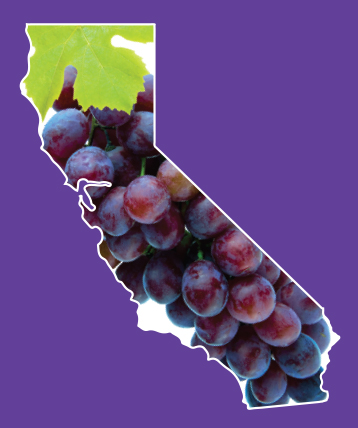
Carménère grows mainly in Chile, specifically the Colchagua Valley, Rapel Valley and in the Maipo Province. It is also grown in the Veneto region of Italy, and recently several wineries in Mendocino, Livermore, Lodi, Napa and Calaveras are producing it, albeit in small quantities. Walla Walla, Washington also has some root stock growing in Carménère. In California only 111 acres are producing Carménère which accounts for .000075% of the red grape harvest. Interestingly while in California the red grape harvest was down 25%, Carménère harvest was up 10%. These numbers are from the USDA Grape Crush Report for 2024, their errata dated August 25, 2025.
Uniqueness of Carménère

Photo from Pat Spangler from Spangler Vineyards/Oregon of Carménère Vineyard
As a varietal, it has the deep ruby coloring and aromas of red fruits. Tannins are softer and milder than Cabernet Sauvignon, thus its use in blending to soften a strong Cabernet. The use is like the use of Merlot in formulating an enjoyable blend. Chile produces a 100% Carménère which has a cherry and fruity flavor but has traces of smoke and earthy notes with the inky coloration.
The Wine – “Wine is bottled Poetry” – Robert Louis Stevenson

Photo ©Michael Kelly
The 2023 Cuda Ridge Carménère Insel Family Vineyard wine comes from Pleasanton on the western portion of Livermore Valley AVA. The vineyard is flat with sandy loam and loam soil. It is 100% Insel Family Vineyard Carménère. On the eyes, a medium-heavy viscosity wine with a unique inviting deep purple/maroon coloration. On the nose, ripe Bing cherries greeted the senses. The palate is where this wine excelled. First the bright cherry taste was intense and concentrated. Ripe juicy plums and dark fruits then came forth with a hint of soft, dry and wet earthen tones (minerality and forest floor) with black tea and leather in the background. The earthen notes are generally found in Chilean Carménère but not found too often in California. The finish was long lasting with mocha and pepper finishing off the enjoyment with a hint of Eucalyptus and Cedar counterbalanced with vanilla.
The Insel Family Vineyards Carménère compared to the Little Dog Vineyard possesses a bit more tannins and acidity which should be considered in the food pairings. It still was enjoyable with caressing tannins on the palate.
The wine is aged in new French oak barrels (50%) and once used American oak (50%) for 17 months. The wine comes in at 13.3% alcohol and is sold at $50/bottle. Only 48 cases were made so this will go fast. It will be released on September 27th and 28th at a release party at Cuda Ridge Wines.
The Food and Wine Pairing – “Food without wine is a corpse; wine without food is a ghost. United and well matched, they are as body and soul: living partners” – Andre Simon

Photo ©Michael Kelly
This wine was specifically chosen to pair with the meal of Pork Tenderloin Tacos. Ingredients for the marinade included olive oil, fresh squeezed lime juice, honey, minced garlic cloves, cumin, chili powder, paprika, dried oregano, kosher salt and flour tortillas. The pork tenderloin was cut up into small strips and added to the marinade for 8 hours in the refrigerator. The pork tenderloin was cooked in an iron skillet on the stove top with about one half the marinade. On a separate burner, the Street Corn Avocado Salsa was prepared. It included grilled corn, Serrano peppers, diced red onion, minced garlic, fresh squeezed lime juice, olive oil, chopped cilantro, cumin and kosher salt. The tacos combined the three (shells, meat and street corn) and topped off with additional chopped cilantro to be served.

Photo ©Michael Kelly
We purposely cut back on the chili powder and Serrano peppers so as not to overpower the wine. This was critical as the tacos and wine were paired wonderfully and I was glad to have less heat in the dish. An interesting note is that we had plenty of pork left over and the next night we used it in a pork taco salad, and it tasted even better!
A very good pairing and if more peppers and spices were to be used you might consider a Merlot wine.
The Winery

Photo ©Michael Kelly
Larry Dino, owner and winemaker at Cuda Ridge Wines, now has all six modern Bordeaux varietals available at the tasting room. The Carménère is the first locally produced wine varietal in the Livermore AVA.
One of the solid and simple marketing ideas that Larry devised is his coloring scheme: White label for his Reserve wines, Black label for his non-Bordeaux wines and purple label for his Bordeaux varietals. Obviously Carménère falls in his purple label.
His Carménère will surely garner many awards in the upcoming wine competitions. Truly a good price point given the uniqueness and scarcity of Carménère plantings in California and the only current Livermore grown Carménère being offered. Besides the Insel Family Vineyard Carménère he offers two other vineyards designated Carménère wines: Little Dog Vineyard and Casa de Viñas. All three Carménère wines will be released to the public on September 27th and 28th at the winery.
His awards for these delicious wines are as follows:
2020 Carménère Insel– Silver Medal, 2022 San Francisco Chronicle Competition
2020 Carménère Little Dog Vineyard – Wine Enthusiast, 92 points
2019 Carménère – Gold Medal, 2021 Orange County Fair
The list of awards for all his other wines is extensive and would direct you to his website to view the dozens and dozens of noteworthy awards.
Sláinte,
Michael Kelly